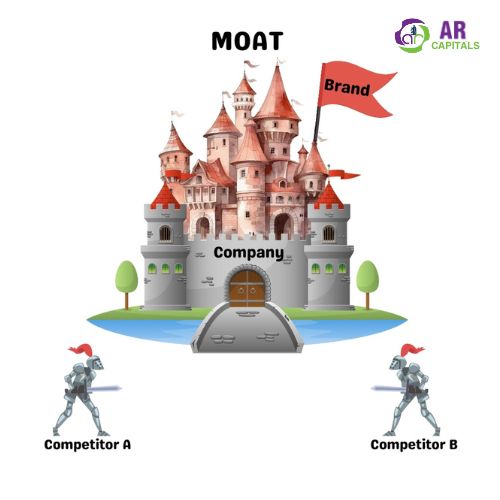
Moat refers to a company that not only dominates its market but also has significant barriers preventing competitors from entering. This combination creates a highly secure and profitable position for the company. Identifying a company with a strong economic moat involves analyzing several key factors that indicate the company’s ability to maintain its competitive edge and protect its profitability over the long term.
Here are some steps and criteria to help you identify such companies:
Assess the Industry
- Market Share: Companies with a large and growing market share in their industry often have strong moats.
- Barriers to Entry: Industries with high barriers to entry, such as significant capital requirements, regulatory hurdles, or complex technology, tend to have companies with strong moats.
Evaluate Competitive Advantages
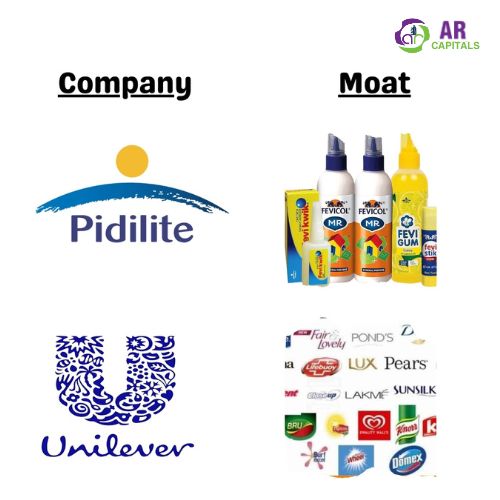
- Brand Strength: Strong brands that resonate with customers and command loyalty suggest a moat. Look for companies with recognizable and trusted brands.
- Cost Leadership: Companies that operate at a lower cost than their competitors due to economies of scale, efficient operations, or unique processes often have a cost advantage moat.
- Network Effects: Firms that benefit from network effects, where the value of their product or service increases as more people use it, have a powerful moat. Examples include social media platforms and marketplaces.
Examine Financial Metrics
- Consistent Profitability: Companies with consistent and high profit margins over several years are likely to have a moat. Look at metrics like return on equity (ROE) and return on assets (ROA).
- Free Cash Flow: Strong and growing free cash flow indicates a company’s ability to reinvest in its business and maintain its moat.
- Revenue Growth: Consistent revenue growth can indicate that a company is successfully leveraging its competitive advantages.
Analyze Intangible Assets
- Patents and Intellectual Property: Companies with significant patents, proprietary technology, or strong research and development capabilities often have technological moats.
- Regulatory Protection: Firms operating in highly regulated industries with favorable government relationships or exclusive licenses have regulatory moats.
Check for High Switching Costs
- Customer Lock-in: Companies whose customers face high switching costs—due to integrated systems, long-term contracts, or specialized services—have a switching cost moat.
- Subscription Models: Businesses with subscription-based revenue models can indicate strong customer retention and high switching costs.
Look at Competitive Landscape
- Few Competitors: Industries with a few dominant players often suggest the presence of strong moats.
- Disruptor Resistance: Companies that have shown resilience against new entrants or disruptive technologies likely have enduring moats.
Review Strategic Decisions
- Smart Acquisitions: Companies that make strategic acquisitions to strengthen their market position or eliminate competitors can fortify their moats.
- Innovative Leadership: Strong and visionary leadership that consistently makes decisions to enhance competitive advantages can signal a robust moat.
Impact of Monopolies with Moats
- Pricing Power: The company can set prices without concern for competitors, often leading to higher profits.
- Stability: The company enjoys stable revenues and market position due to the lack of competition and high entry barriers.
- Innovation and Investment: With secure profits, the company can invest heavily in innovation and further entrench its dominant position.
- Consumer Impact: While consumers may benefit from consistent product quality and reliability, they may also face higher prices and less choice due to the lack of competition.
Example of companies having strong economic moats, giving them a significant competitive edge in their respective industries.
1.Reliance Industries Limited (RIL)
- Industry: Energy, Retail, Telecommunications
- Moats:
- Diversification and Integration: Reliance has a highly integrated business model spanning petrochemicals, refining, retail, and telecommunications (Jio).
- Scale: Its vast scale of operations in petrochemicals and refining gives it a cost advantage.
- Market Dominance: Jio has disrupted the telecom sector with its extensive network and affordable pricing, rapidly gaining a massive subscriber base.
- Brand Strength: The Reliance brand is highly recognized and trusted across India.
2.Asian Paints
- Industry: Paints and Coatings
- Moats:
- Brand Dominance: Strong brand recognition and trust in the quality of products.
- Distribution Network: Extensive and efficient distribution network across urban and rural India.
- Product Innovation: Continuous innovation in products and customer service.
- Economies of Scale: Large scale of operations leading to cost advantages.
3.Nestle India
- Industry: Food and Beverages
- Moats:
- Brand Portfolio: Strong portfolio of trusted brands like Maggi, Nescafé, and KitKat.
- Distribution Reach: Wide distribution network ensuring deep market penetration.
- Product Innovation: Continuous introduction of new products catering to local tastes.
- Consumer Loyalty: High level of consumer trust and loyalty.