

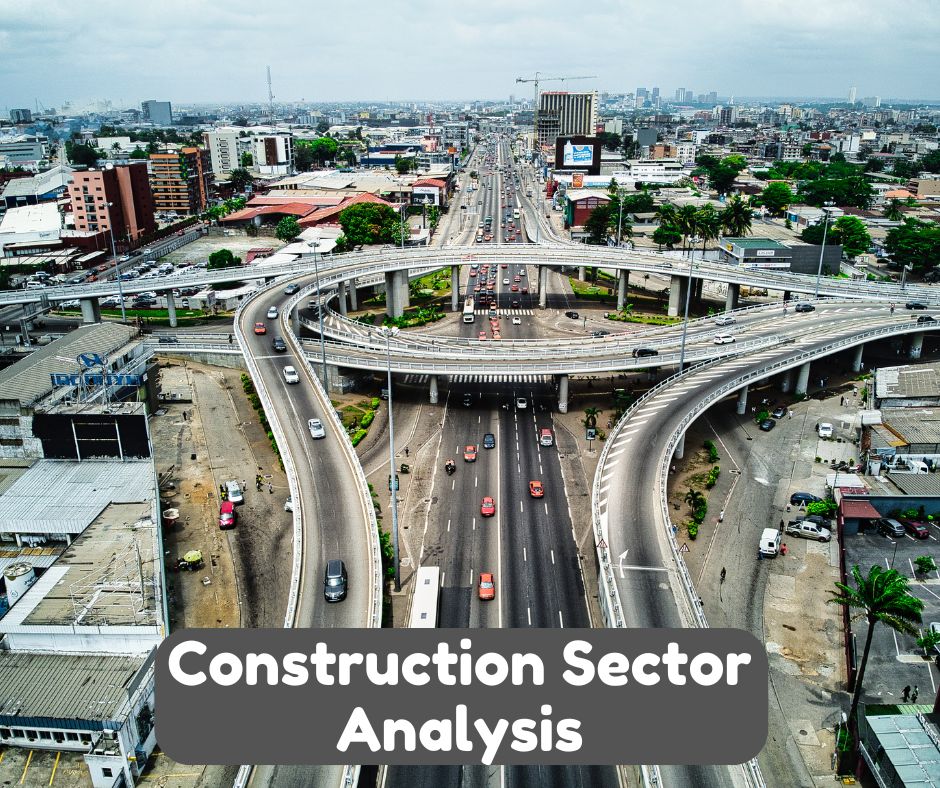
1. Introduction to the Indian Construction Industry
1.1 Introduction
The construction industry is one of the largest contributors to India’s economic development. It creates physical infrastructure such as homes, commercial buildings, roads, bridges, airports, railways, ports and industrial facilities. The sector supports millions of jobs and has strong linkages with cement, steel, engineering, electrical equipment, real estate and financial services. As India continues to urbanise and invest in infrastructure, construction is expected to remain a key growth engine.
1.2 What is the Construction Industry?
The construction industry includes companies involved in planning, designing, engineering, building, renovating and maintaining physical assets. Construction companies execute projects for governments, private businesses and individuals, ranging from small residential buildings to large infrastructure projects worth thousands of crores.
1.3 Evolution of the Indian Construction Industry
| Period | Major Development |
| Before 1991 | Government-led infrastructure development |
| 1991–2005 | Economic liberalisation and private sector participation |
| 2005–2015 | Growth in highways, airports, metros and real estate |
| 2015–2026 | Smart Cities, PM Gati Shakti, Bharatmala, affordable housing and digital construction |
1.4 Types of Construction
| Segment | Description | Examples |
| Residential | Housing and apartments | Homes, villas, apartments |
| Commercial | Business buildings | Offices, malls, hotels |
| Industrial | Manufacturing facilities | Factories, warehouses |
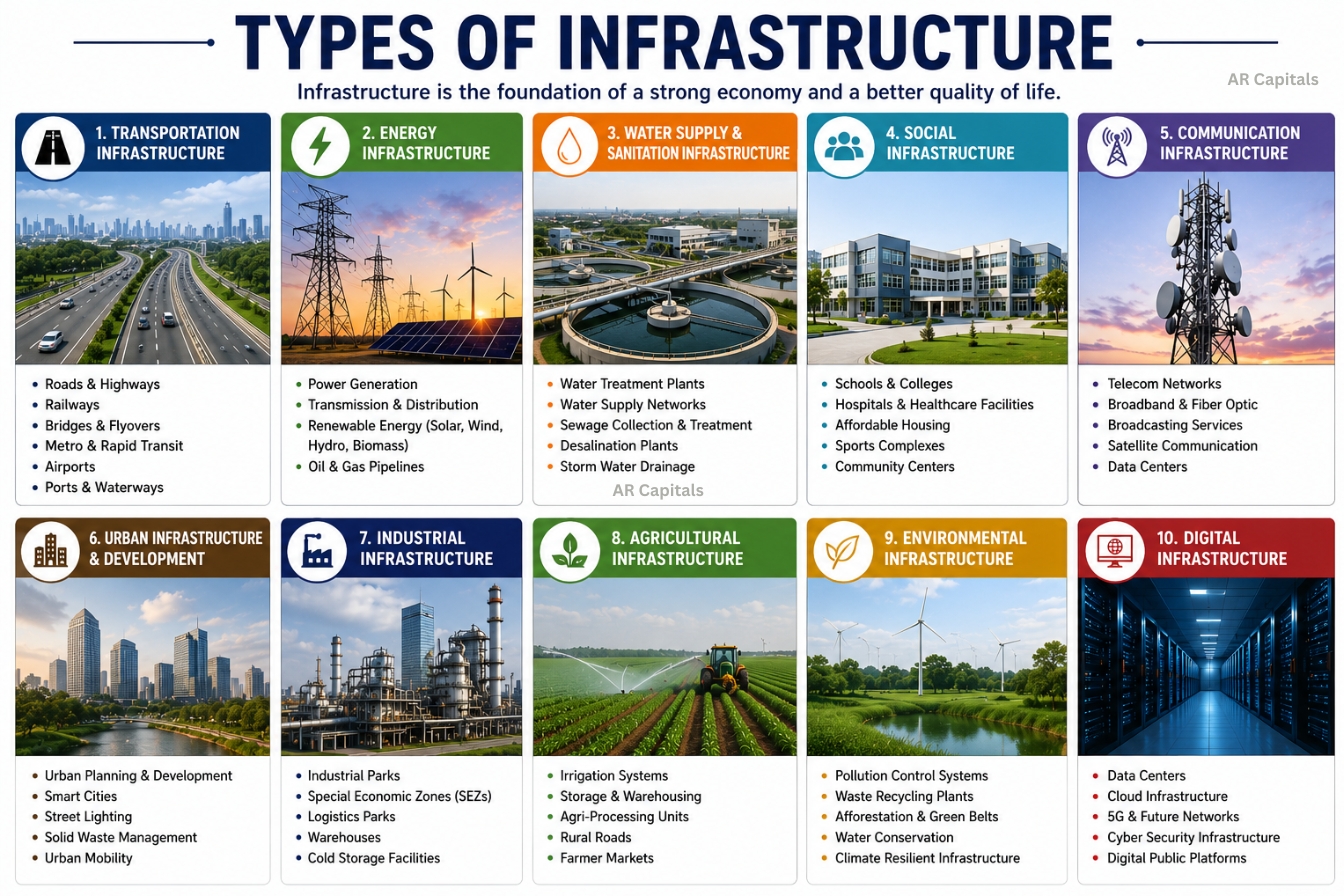
| Infrastructure | Public assets | Roads, bridges, metros, airports, ports |
1.5 Construction Value Chain
Project Planning → Design & Engineering → Tendering → Procurement → Construction → Quality & Safety → Commissioning → Operation & Maintenance
1.6 Major Stakeholders
- Government departments and public agencies
- Private developers
- Engineering, Procurement and Construction (EPC) contractors
- Architects and consultants
- Suppliers of cement, steel and equipment
- Financial institutions and investors
1.7 Indian Construction Industry Overview (2026)
India is among the world’s fastest-growing construction markets, supported by urbanisation, infrastructure investment, industrial expansion and housing demand. Government programmes such as PM Gati Shakti, Bharatmala, metro rail expansion and affordable housing continue to create long-term opportunities for construction companies.
1.8 Key Growth Drivers
- Urbanisation and population growth
- Government infrastructure spending
- Affordable housing initiatives
- Growth in logistics and industrial parks
- Private capital expenditure
- Digital construction technologies such as BIM and AI
1.9 Investor Insight
Construction companies should not be evaluated only on revenue growth. Investors should understand the order book, execution capability, working capital management, debt levels and project diversification before making investment decisions.
2. How Construction Companies Make Money
2.1 Introduction
Construction companies generate revenue by executing projects for governments, private developers, industries and infrastructure agencies. Their earnings depend not only on winning projects but also on completing them on time, controlling costs and efficiently managing working capital.
2.2 Construction Business Models
| Model | Description | Revenue Source |
| EPC | Engineering, Procurement and Construction contracts | Project execution payments |
| BOT | Build, Operate and Transfer | Toll or operating revenue |
| BOOT | Build, Own, Operate and Transfer | User charges and asset operations |
| HAM | Hybrid Annuity Model | Government annuity + project execution |
| PMC | Project Management Consultancy | Consulting and supervision fees |
2.3 Project Life Cycle
Tender Announcement → Bid Submission → Contract Award → Design & Planning → Procurement → Construction → Quality Inspection → Project Completion → Final Payment
2.4 Major Revenue Sources
- Construction contracts
- Engineering and design services
- Project management consultancy
- Toll collections (BOT projects)
- Operation and maintenance contracts
- Variation orders and additional works
2.5 Cost Structure
| Cost Component | Examples |
| Raw Materials | Cement, steel, aggregates |
| Labour | Skilled and unskilled workforce |
| Machinery | Cranes, excavators, batching plants |
| Subcontracting | Specialised contractors |
| Finance Cost | Interest on working capital |
| Administrative Cost | Project management and overheads |
2.6 Order Book – Why It Matters
The order book represents the total value of projects awarded but not yet completed. A healthy and diversified order book provides revenue visibility for future years and is one of the most important indicators when analysing construction companies.
2.7 Working Capital Cycle
Mobilisation Advance → Material Purchase → Construction Work → Client Billing → Payment Collection → Next Project
2.8 Practical Example
Suppose an EPC company wins a ₹1,000 crore highway project. Revenue is recognised progressively as construction milestones are achieved. Profitability depends on efficient execution, timely payments from the client, material cost control and effective project management.
2.9 Investor Insight
Construction companies with a strong order book, healthy cash flow, disciplined working capital management and consistent execution generally create greater long-term shareholder value than companies that rely on aggressive bidding or excessive debt.ain diversified product pipelines. Indian pharmaceutical companies increasingly compete through complex generics, specialty formulations, biosimilars and CDMO services rather than only low-cost manufacturing.
3. How to Analyse Construction Companies
3.1 Introduction
Construction companies should be analysed differently from manufacturing or service businesses. Their performance depends on project execution, order book quality, working capital management, profitability and balance sheet strength rather than only revenue growth.
3.2 Step-by-Step Analysis Framework
| Area | What to Analyse |
| Order Book | Size, diversification and visibility of future revenue |
| Order Inflow | New projects won during the year |
| Execution | Ability to complete projects on time |
| Profitability | EBITDA margin and operating margin |
| Working Capital | Receivables, inventory and payable cycle |
| Debt | Borrowings and interest burden |
| Cash Flow | Operating cash flow consistency |
| Management | Execution record and corporate governance |
3.3 Key Financial Metrics
| Metric | Meaning | Why It Matters |
| Order Book | Value of pending projects | Future revenue visibility |
| Book-to-Bill Ratio | Order book ÷ annual revenue | Growth sustainability |
| EBITDA Margin | Operating profitability | Execution efficiency |
| ROCE | Return on capital employed | Capital efficiency |
| ROE | Return on equity | Shareholder returns |
| Debt-to-Equity | Leverage | Financial risk |
| Operating Cash Flow | Cash from operations | Business quality |
| Working Capital Days | Cash conversion cycle | Liquidity |
3.4 Government vs Private Projects
Government projects generally provide larger order books and long-term opportunities but may involve slower payments. Private projects can offer faster execution and collections but may fluctuate with economic conditions. A balanced project mix reduces business risk.
3.5 Red Flags
- Continuous decline in order inflow
- High debt and weak cash flow
- Large project delays
- Frequent cost overruns
- Customer concentration
- Persistent low margins
- Governance issues or litigation
3.6 Investor Checklist
| Question | Yes/No | Remarks |
| Is the order book growing? | ||
| Are EBITDA margins stable? | ||
| Is operating cash flow positive? | ||
| Is debt under control? | ||
| Is ROCE improving? | ||
| Are projects diversified? | ||
| Does management have a good execution record? |
3.7 Investor Insight
The best construction companies are not always the largest. Investors should prefer companies with disciplined bidding, strong execution, healthy cash flow, manageable debt and a diversified order book rather than those chasing aggressive growth.3.1 Introduction
Analysing a bank is different from analysing manufacturing or IT companies. Investors should focus on asset quality, profitability, capital strength, deposit franchise and management quality rather than only revenue and earnings growth.
4. Risks in the Construction Industry
4.1 Introduction
The construction industry offers significant growth opportunities, but it is also exposed to operational, financial and regulatory risks. Delays, cost overruns and weak project execution can materially affect profitability. Understanding these risks helps investors identify companies capable of delivering sustainable long-term performance.
4.2 Major Risks in the Construction Industry
| Risk | Impact |
| Project Delay | Delays increase costs, postpone revenue recognition and reduce profitability. |
| Cost Escalation | Higher prices of cement, steel, fuel and labour compress margins. |
| Working Capital Risk | Slow client payments create cash-flow pressure. |
| Labour Availability | Shortage of skilled labour can delay execution. |
| Regulatory Risk | Environmental approvals and policy changes may delay projects. |
| Land Acquisition | Legal disputes and acquisition delays affect project timelines. |
| Interest Rate Risk | Higher borrowing costs reduce profitability. |
| Litigation Risk | Contract disputes may result in financial losses and delays. |
| Economic Slowdown | Lower private investment can reduce new project awards. |
| Safety & Quality Risk | Accidents and poor quality may lead to penalties and reputational damage. |
4.3 Risk Indicators Investors Should Monitor
| Indicator | Healthy | Warning Sign |
| Order Book | Growing & diversified | Declining or concentrated |
| Working Capital | Stable | Continuously increasing |
| Debt | Moderate | Excessive leverage |
| Cash Flow | Positive | Negative for long periods |
| EBITDA Margin | Stable | Sharp decline |
| Project Execution | On schedule | Repeated delays |
4.4 How Leading Companies Manage Risk
- Maintain a diversified order book across sectors and geographies.
- Use long-term procurement contracts to reduce raw-material volatility.
- Strengthen project planning and monitoring.
- Maintain adequate liquidity and banking relationships.
- Invest in worker safety, quality control and digital project management.
- Avoid aggressive bidding on low-margin projects.
4.5 Investor Red Flags
Declining order inflows over multiple years.
Rapid increase in debt without revenue growth.
Persistent negative operating cash flow.
Frequent project delays or cost overruns.
Large customer concentration.
Qualified audit opinions or governance concerns.
5. Future of the Indian Construction Industry (2026–2035)
5.1 Introduction
India’s construction industry is expected to remain one of the fastest-growing sectors over the next decade. Strong government capital expenditure, rapid urbanisation, industrial expansion and rising private investment are likely to support sustained demand for infrastructure and real estate projects.
5.2 Key Growth Drivers
- Government infrastructure investment
- Rapid urbanisation and smart city development
- Affordable housing initiatives
- Expansion of roads, railways, airports and ports
- Growth in logistics parks and data centres
- Manufacturing expansion under Make in India
- Increasing private capital expenditure
5.3 Emerging Trends
| Trend | Impact |
| Building Information Modelling (BIM) | Improves project planning and reduces rework |
| Artificial Intelligence | Better scheduling, cost estimation and risk monitoring |
| Prefabrication | Faster construction with improved quality |
| Green Buildings | Lower energy consumption and sustainable development |
| 3D Printing | Potential reduction in construction time and waste |
| Digital Project Management | Real-time monitoring and better execution |
5.4 Government Initiatives
- PM Gati Shakti National Master Plan
- Bharatmala Pariyojana
- Sagarmala Programme
- Metro Rail Expansion
- Pradhan Mantri Awas Yojana (PMAY)
- National Infrastructure Pipeline (NIP)
5.5 Opportunities for Investors
Companies with strong execution capabilities, diversified order books, healthy balance sheets and exposure to infrastructure, railways, defence, industrial construction and urban development are likely to benefit from India’s long-term infrastructure spending.
5.6 Challenges Ahead
- Commodity price volatility
- Labour shortages
- Environmental approvals
- Funding constraints
- Climate-related construction risks
- Increasing competition
5.7 Investor Outlook
Long-term investors should focus on construction companies with consistent order inflows, strong cash flows, prudent debt management and a proven execution track record. Businesses adopting digital technologies and sustainable construction practices may gain a competitive advantage over time.
References:
- Ministry of Housing and Urban Affairs (MoHUA). Annual Reports and Urban Development Publications. Accessed: 2026.
- Ministry of Road Transport and Highways (MoRTH). Annual Report 2025–26.
- National Highways Authority of India (NHAI). Annual Report 2025–26.
- Ministry of Railways. Annual Report 2025–26.
- India Brand Equity Foundation (IBEF). Construction and Infrastructure Industry Report. Updated: 2026.
- National Infrastructure Pipeline (NIP). Official Project Information. Accessed: 2026.
- PM Gati Shakti National Master Plan. Government of India. Accessed: 2026.
- CRISIL. Infrastructure & Construction Sector Outlook 2025–26.
- CARE Ratings. Construction Sector Reports. 2025–26.
- ICRA. Indian Construction Industry Outlook. 2025–26.
- World Bank. Infrastructure and Urban Development Reports.
- Annual Reports (2025–26): Larsen & Toubro, NCC Limited, KNR Constructions, Ahluwalia Contracts, PNC Infratech, Rail Vikas Nigam Limited (RVNL).
Disclaimer:
This guide has been prepared solely for educational and informational purposes. The information has been compiled from publicly available government publications, industry reports, regulatory documents and company annual reports believed to be reliable as of 2026. It should not be considered investment advice or a recommendation to buy or sell any security. Construction projects and companies are subject to business, regulatory, financial and execution risks. Readers should perform their own research and consult a qualified financial advisor before making investment decisions. While every effort has been made to ensure accuracy, AR Capitals does not guarantee the completeness, accuracy or timeliness of the information presented.